Tuesday, October 22, 2013

TEXPO Announces Multi-Million Dollar Investment and Scholarships for ICT in Pakistan

texpo TEXPO Announces Multi Million Dollar Investment and Scholarships for ICT in Pakistan
TEXPO, the global technology and infrastructure provider, announced a multi-million dollar investment over the next five years to the country’s ICT sector.
Additionally the organisation has awarded 34 university scholarships to successful IT students under its ‘Mentoring a Talent’ initiative.
TEXPO said that together with its exclusive partner in Pakistan, Cannon Technologies, it wants to pave the way for other global ICT organizations to explore and invest in the region.

Announcing the company’s investment plans to revitalise Pakistan’s ICT sector, Dr Sarfaraz Alam, CEO of TEXPO, said, ‘We are ecstatic with our participation as the platinum sponsor of the event and equally delighted with the meetings we have had. It is our desire to expand in Pakistan, build infrastructure and create jobs for a highly talented and enthusiastic market here.’
Pakistan is fast becoming the destination of choice for a significant number of international companies looking to relocate their operations. The ready availability of skilled professionals, a comprehensive ICT infrastructure and affordable rates for connectivity offer considerable time and cost-savings for entrepreneurs. The global share of the country´s ICT industry is estimated at over US$2bn, ‘I hope with our current initiative and future plans, we shall have many more internationally recognized organisations focusing on Pakistan,’ continued Dr Alam.
During recently held ITCN Asia expo, the British Deputy High Commissioner Mr Mike Reilly awarded scholarships to 34 successful IT students from universities all over Pakistan, who took part in TEXPO’s global social initiative programme ‘Mentoring a Talent’.
Now in its second year, the programme helps IT university students in South Asian countries to reach their full potential in academic studies and to thrive in the business world   Currently the initiative focuses on IT students in Pakistan, but TEXPO will be extending this to additional disciplines in education in the future and to other countries including Afghanistan, Bangladesh, Sri Lanka, India and Nepal.
TEXPO has more than 15 years’ experience in developing infrastructure for satellite tracking ground stations and communications infrastructures, organisational maturity assessments and performance evaluations for leading private institutions and governments.

Monday, October 21, 2013

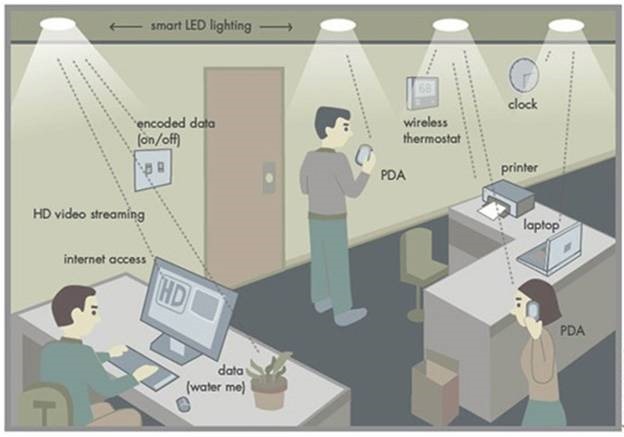
Li-Fi: Technology that Uses Light Bulb to Establish Internet Connection

clip image0023 Li Fi: Technology that Uses Light Bulb to Establish Internet Connection
A team of Chinese experts and specialists have successfully developed, and experimented an innovative way of gaining access to the Digital World of the Internet using the signals sent through the Light Bulb instead of Radio Waves as in Wi-Fi.
Scientists named it Li-Fi.
In case if you don’t know, Wi-Fi operates in the frequency range between 2.4 and 2.483 GHz. IEEE 802 (11a operates in the frequency range from 5.725 to 5.850 GHz. These are often referred to as the “2.4 GHz” and “5GHz” bands).
The term Li-Fi may not be new to many ears; in fact it is around since 2011, when Harald Haas had first used it in his TED Global talk on Visible Light Communication on this very context.
The Li-Fi technology operates under the principle that light can be used to carry Signals as an alternative to traditional radio frequencies; it keeps serving as long as there is no blockage of any kind, between the Light source and a Computer.
Chi Nan, the I.T Professor at Shanghai’s Fudan University, who also leads the Li-Fi research team (which includes scientists from the Shanghai Institute of Technical Physics of the Chinese Academy of Sciences) have said that, “One-watt LED Light Bulb may establish an Internet connection for four Electronic Gadgets at once.”, she added that, “A light bulb with embedded microchips can produce data rate as fast as 150Mbps.
The current tools for Wireless Signal Transmission is expensive and less efficient, said Chi.
“Millions of base stations have been established for strengthening the signals of cell phones, but most of the energy is consumed for their cooling systems. The energy utilization rate is only five percent” she explained.
In today’s world where two thirds of the total population does not have internet access, and places like Pakistan, China and India, where over billion people combined don’t have this facility; gaining access to the Internet by just turning on the Light bulb will be nothing less than a dream come true.
According to Chi,
“Wherever there is a LED light bulb, there is an Internet signal. Turn off the light and there is no signal”
More importantly, according to the experts, the development of a series of key related pieces of technology, including light communication controls as well as microchip design and manufacturing, is still in an experimental period and there is still a long way to go to make Li-Fi a commercial success.
Despite the fact that the Technology is still in the experimental period, Netizens should be excited to view 10 sample Li-Fi kits that will be on display at the China International Industry Fair that will kick off on November 5 in Shanghai.
Photo courtesy: Extremetech

Production of World's 1st Super-Encrypted Phone has Begun

Super Secure Phone Production of Worlds 1st Super Encrypted Phone has Begun
After the Edward Snowden’s revelation of PRISM – a surveillance program commanded by the United States National Security Agency (NSA) – that it is gathering data from your phone calls, emails, text messages, Facebook chats and every possible form of your Digital communications, there was an ample tumult from the People all over the world.
Ever since after the revelation, everyone has gone ballistic and trying to discover the way to keep their communication data safe from getting into NSA’s hand.
While you can do a tinfoil cap to keep NSA away from collecting data from your subconscious, layering your phone in the same way isn’t going to solve the problem, but that doesn’t propose that you do not have any other options to protect your conversations from any undesired spying.
While Security Organizations and individuals are coming forward with diverse solutions like, the use of secure mobile applications, or to use secure browsers, like TOR to keep you safe from eavesdropping.
QSAlpha (QSα) – a San Francisco based company with its superphone division in Taiwan – on the other hand, is developing the super encrypted Mobile Phone, Quasar lV4
clip image0022 Production of Worlds 1st Super Encrypted Phone has Begun
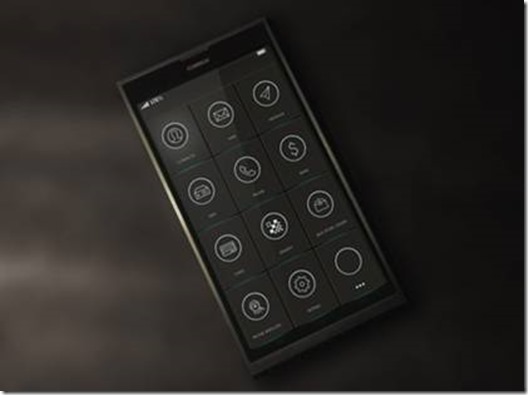
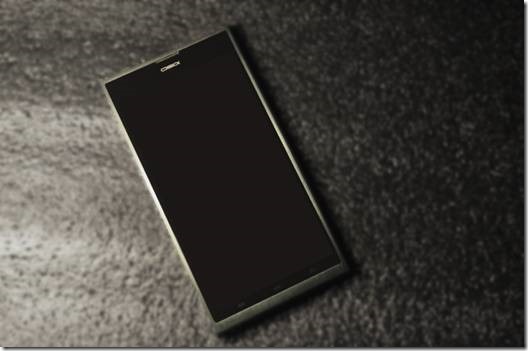
Quasar IV is a project that is designed to reinstate personal liberty to the internet. Based on the world’s most advanced security concepts and a trusted-authentication technology, it allows users to self-manage their digital interactions and create a trusted social circle.
The Quasar IV is a “cipherphone” that safeguards the user’s digital identity with self-authenticated verification. All data exchanges between Quasar IVs are protected by trusted-authentication technology.

clip image004 Production of Worlds 1st Super Encrypted Phone has Begun
It is is a gateway to a community of secure messages, emails, calls, cloud storage and mobile applications. It uses a revolutionary self-authenticated, asymmetric encryption system called Quatrix that automatically verifies the identity of other Quasar IV users before information is sent.
Your private identity key is encrypted in a hardware chip, making unauthorized access to data extremely difficult.
QuaOS, Quasar IV’s operating system, is a fusion of Android, Linux and the Quatrix encryption software.
The Quasar IV provides unprecedented security for Android users.
According to QSAlpha, Quasar IV has been designed for:
  • Individuals who use their mobile devices to handle e-commerce transactions, day-to-day banking, storage of sensitive personal information or just casual correspondence.
  • Individuals who value privacy and peace of mind and would like to ensure that their private correspondence is kept private.
  • Individuals who want to ensure that eavesdroppers and stalkers cannot track their every move in the digital domain.
  • Businesses that value data security and want to ensure that communications between executives, employees, customers and others cannot be read or listened to by third parties.
Quasar IV offers protection against external threats to enterprise and personal users of digital networks.
The Quasar IV offers the following key features:
  • QuaOS (based on Android 4.3, powered by Quatrix)
  • Quatrix Trusted-Authentication Processor
  • 5” FHD 1920 x 1080 Sharp (IGZO) Display
  • Corning Gorrilla Glass III
  • Snapdragon 800 Quad-Core CPU @ 2.3GHz per core
  • GPU with OpenCL, OpenGL ES3.0 support
  • 3GB (LP-DDR3) RAM
  • 64GB/128GB (eMMC) Storage
  • MicroSD External Memory Card
  • Dual 13MP rear facing Sony cameras (optimized for computer vision) | 8MP front camera
  • FDD-LTE | TDD-LTE | UMTS | CDMA2000 | GSM
  • Nano-SIM card
  • GPS, WiFi (a/b/g/n/ac), Bluetooth 4.0, NFC
  • Gyroscope, Gravity, Proximity, Compass, Thermal, Barometer and Atmospheric Sensors
  • 3,300mAh battery
  • IP57 water proof
On the Quasar IV Indiegogo page, Steve Chao – Founder and CEO of QSAlpha – said that production with “one of the world’s largest consumer electronics OEMS manufacturers” has already begun, as a result of support from “various vendors and companies” who share the founding team’s passion for a vision of an ultra-secure mobile device.
The phone however, will be started shipping in Q2 2014 with a yet unspecified price tag.

Microsoft Finally Releases GDR3 Update for Windows Phone 8

WP GDR3 Microsoft Finally Releases GDR3 Update for Windows Phone 8
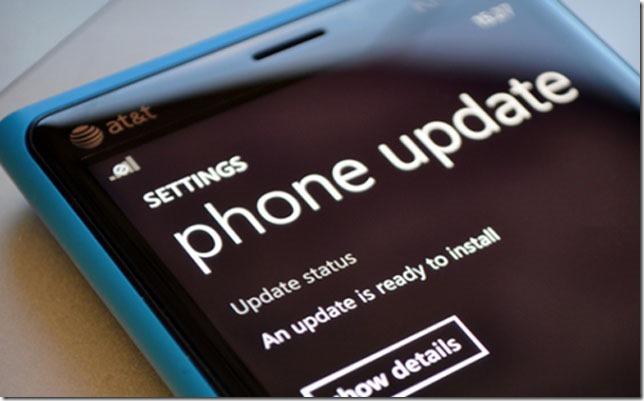
Microsoft has finally outed the Windows Phone 8 Update 3 after making its fans wait for a long time. The update brings support for a lot of enhancements which were rather dubiously missing from the operating system for ages.
Visually, the OS has seen a minor overhaul. A total of six Live Tiles can be placed horizontally. Support for up to 6 inch displays has been brought, with resolution of up to 1920 x 1080 pixels. No signs of a unified notification history are seen but the Live Tiles are bit of a substitute to that anyway.
Support for advanced hardware has finally been brought. Qualcomm’s SnapDragon 800 processor is supported now, which should be enough for the already-fluid OS.

Nifty, useful things like separate ringtones for notifications, phone-calls, etc., screen-rotation lock, advanced storage management and a much-useful task manager which adds a button for directly closing apps are added.
Accessibility features for the blind is added to make using the phone easier by speaking commands out loud.
Microsoft has also increased support for third-party Bluetooth accessories. A new feature called Driving Mode keeps other notifications (read: distractions) at bay while you’re using your phone for its mapping services.
Lastly, the support. Unlike WP8, Windows Phone 8 GDR3 will be coming to existing phones, in the next few months. Nokia’s Lumias and a few HTC & Samsung-built Windows Phones should be getting this update soon.
While the update hasn’t brought everything we hoped and wished for, it will certainly make life a lot easier for existing Windows Phone users, apart from closing the gap between it and other operating systems.

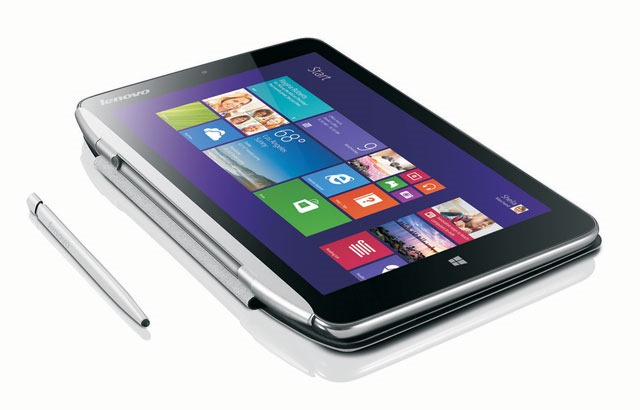
Lenovo Outs its First 8 Inch Windows 8 PC for $299

Lenovo Miix 2 8 verge super wide Lenovo Outs its First 8 Inch Windows 8 PC for $299
People who thought that Windows 8 portables couldn’t possibly be shorter than 10 inches can put their minds at rest: they’re coming and many more are in the pipeline.
Lenovo’s 8 inch Miix 2 tablet is another one of these and runs on Intel’s latest Bay Trail platform.
Having an 8 inch display with resolution of 1280 x 800, the Miix 2 is 8.35 mm thick and 350g heavy. Under the hood, it comes with 2GB worth RAM and Intel’s quad-core Bay Trail processor. A duo of 2mp front and 5mp back cameras are included in the package. A card slot can be used for expanding the memory.
The tablet runs on full Windows 8.1 and comes with Microsoft Office Home & Student 2013 out-of-the-box.
As for the pricing, the base 32 GB model starts at $299.
Optional cover and stylus will cost $20. There will be a top-of-the-line 128 GB model too. It will be available for sale later this year.