Monday, October 28, 2013

PTA Officers Visit Telcos to Confirm Blocking of Unverified SIMs

Pakistan Telecommunication Authority (PTA) has started to confirm blocking of unverified SIMs by inspecting the Home Location Registers (HLRs) of the Cellular Mobile Operators (CMOs), said a statement issued by the regulator.
PTA team headed by Director General (Enforcement) visited CMOs’ offices during last week to confirm the blocking of SIMs that could not be re-verified beyond September 2013.
During the visit, progress made by CMOs on identifying and blocking “not re-verified” SIMs was checked by PTA. CMOs assured PTA to continue their efforts against identity theft wherein SIMs were activated without the knowledge of CNIC holders, said the statement.
It was, however, not mentioned in the statement that how many unregistered SIMs were blocked during the process. It also didn’t clarify if all the unregistered SIMs were blocked or if there were still any unregistered byt unblocked SIMs remaining.
It is pertinent to mention here that PTA has set up a system called “SIM Information System – 668” in order to ensure that the SIMs are registered against the CNIC of the authorized (legitimate) user.
A customer can get the count of each mobile company’s SIMs registered against his/her CNIC by sending his/her CNIC number to short code “668”. In case of any data mismatch, the customer can remove extra SIMs against his/her CNIC by requesting respective operator.
Users of all such disowned SIMs are then approached by respective mobile operator to get the SIM registered against his/her CNIC. Otherwise, the same is blocked after 15 days’ time period. General public is requested to support PTA and CMOs by using this system and disown extra SIMs registered on their CNICs without their consent.
PTA is following the policy guidelines of the government on blocking and verification of SIMs. It is hoped that the issue of un-authorized SIMs will be resolved through a joint effort by all stakeholders including the general public.

Sunday, October 27, 2013

The Lumia 2520 isn't Nokia's First Tablet, Check Out the Lost Ones Here

Last week, Nokia announced its “first” Windows tablet, the Lumia 2520. (Not many would’ve even given that aspect attention.) This means that while the Lumia 2520 is the company’s first tablet in years, it is far from being the first one.
If you’re a Nokia fan, you already know about following devices that were marketed by Nokia as “Internet tablets”; these lost products started coming to market during 2005 with the 770. The last one (N900) came in 2009.
What’s more interesting is that all of them came with a resistive touchscreen, two years before Apple popularised the technology in portable devices.

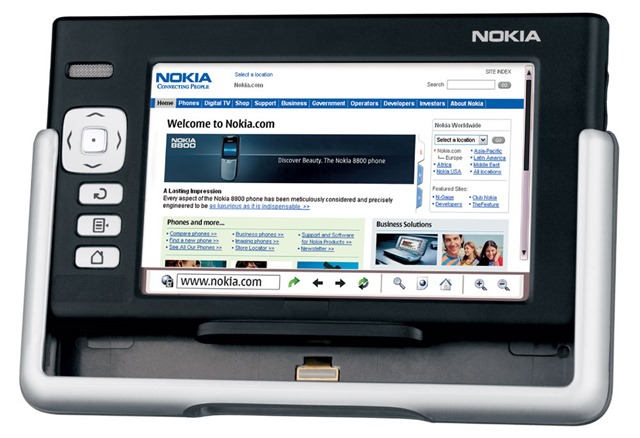
Nokia 770 (2005)

nokia 770 internet tablet The Lumia 2520 isnt Nokias First Tablet, Check Out the Lost Ones Here!
Nokia’s first Internet tablet ran on Maemo, the Linux-based OS and had a 4.1 inch resistive touchscreen which got input from a stylus. Apart from that, it had a 252Mhz processor, 64 MB RAM and 128 MB expandable memory.
The resultant was a slow device which got scathing reviews. Long forgotten.

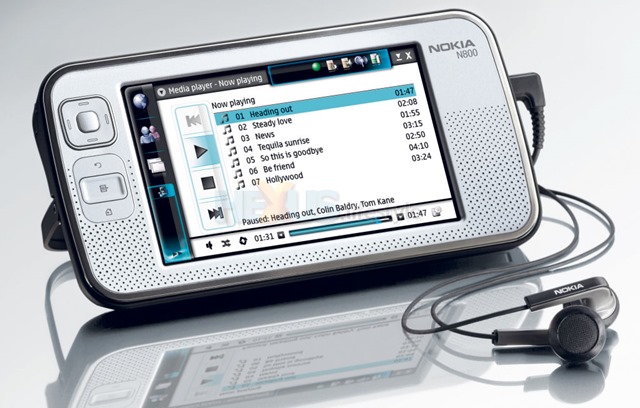
Nokia N800 (2007)

nokia n800 12 The Lumia 2520 isnt Nokias First Tablet, Check Out the Lost Ones Here!
The next attempt came just days after the original iPhone came. Despite this, the N800 is probably the most neglected Nokia product from the top-end N-series.
Having a 4.1 inch resistive touchscreen again, this time it came with an underclocked 330 Mhz processor, 128 MB RAM, 64 MB expandable storage and upgraded Meamo OS. At least the thing worked this time, getting 3.5 stars out of 5 from Cnet.
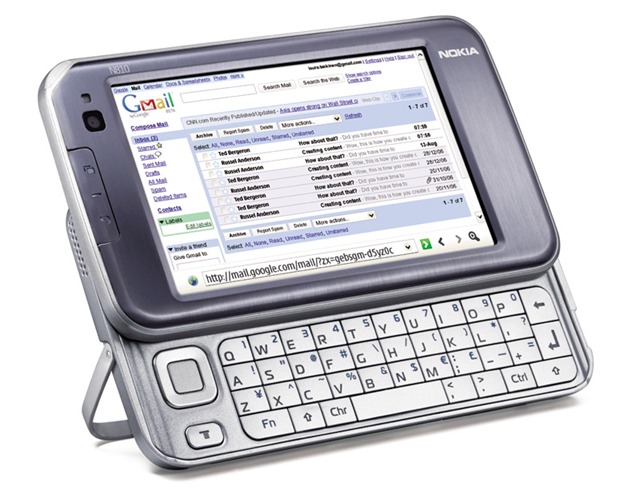
Nokia N810 (2007)
nokia n810 press 3 The Lumia 2520 isnt Nokias First Tablet, Check Out the Lost Ones Here!
The N810 was the last Nokia product which got marketed as an Internet tablet and this time, it came with several big changes. Nokia N810 featured a more pocketable design plus a slide-out backlit keyboard.
The 4.1 inch resistive touchscreen display was still there, but it had 2 GB expandable memory, newer Maemo OS and a VGA camera this time. It was powered by a 400 Mhz processor on top of a 128 MB RAM. This product too got forgotten, however.
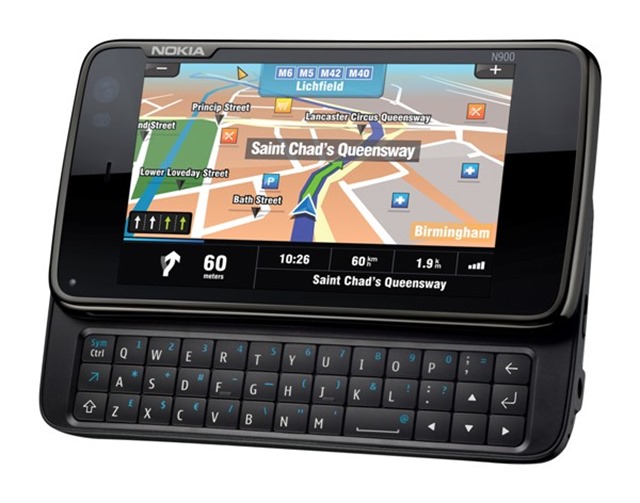
Nokia N900 (2009)
Sygic on Nokia N900 Maemo The Lumia 2520 isnt Nokias First Tablet, Check Out the Lost Ones Here!
The N900 wasn’t an internet tablet only, it was a phone and it ran on the same Maemo OS. In my opinion, that telephone functionality is the reason why the N900 is a reasonably popular device because you see, a Nokia product without a SIM card slot isn’t quite Nokia enough. Therefore, even the Lumia 2520 and the Nokia Booklet 3G come with with SIM card functionality.
The touchscreen was smaller at 3.5 inches and it borrowed the same bizarre keyboard from the N97 but the N900 came with a Cortex A8 processor, 256 MB RAM, 32 GB storage and a 5 megapixel front camera. At the time of its release, it was among the most powerful phones on the market.
But its greatest legacy was its ability to run almost everything you threw at it. From Android to Windows Mobile, everything you throw at it runs. Hell, there are even tutorials of full-fledged Windows running on the device. This amazing capability will keep the N900 alive for a long time to come.
These all internet tablets are obsolete and discontinued now and the future lies in Lumia 2520 and Windows. Pretty much all of these “lost” devices were failures and it will be worth watching whether the 2520 will change that.

Friday, October 25, 2013

Content of Policy Directive for Next Generation (3G) Telecom Licenses


Ministry of Information Technology and Telecom, earlier this month, issued the policy directive for the auction of 3G / next generation telecom licenses. MoIT had said that the policy for auction of next-gen licenses was approved by Mr. Nawaz Sharif, the Prime Minister of Pakistan.
This policy directive was handed over to Pakistan Telecommunication Authority for the implementation of license auction, for which PTA is already perusing with all its resources.
Here is the full content of the policy directive on the auction of next generation telecom licenses:
  • PTA will be responsible for transparent and competitive auction of the next-gen spectrum.
  • The directive said that allotment of spectrum will be technology neutral and will be usable for technologies standardized for 3G and advanced generation(s) of mobile services.
  • As identified by Frequency Allocation Board (FAB), a 30 MHz paired spectrum in 1.9GHz/2.1GHz band will be auctioned to telecom operators.
  • PTA is entrusted to carry out the auction process, fulfilling the policy objective of optimal outcome mitigating chances of collusion among bidders.
  • Auction shall by accordingly conducted by PTA in the minimum possible time after the issuance of this directive.
  • PTA shall carry out the appointment of internationally reputed consultant(s) with following terms of references (TORs):
    • Identify the number and size of blocks to be auctioned considering the market situation
    • Recommend the most appropriate auction methodology and plan
    • Recommend the reserve price for auction
    • Design and management of auction process
    • Analyse potential impact on auction price with respect to upfront payment of the bid price versus staggered payment over five years and recommend the optimal bidding procedures
    • Develop a license template for new license
    • Any other allied matter relating to the auction and any assignments deemed necessary by PTA
  • Reserve price of 1 MHz will be finalized by the Federal Government after recipient of report from consultants.
  • All existing cellular mobile operators as well as new entrants will be eligible to participate in the auction
  • A new license for the provision of next generation mobile services will be issued to the successful bidders/auction winners.
  • The tenure of the new license will be 15 years.
  • For efficient and optimal rollout of next generation mobile services, cost-based sharing of infrastructure shall be considered as a matter of first priority by cellular operators at the time of rollout.
  • PTA shall prepare detailed guidelines for infrastructure sharing with the view to provide level-playing field to both existing as well as new entrant(s).
  • Existing licensee would provide National Roaming on request by any New Entrant(s) or as directed by PTA, as deemed appropriate.
  • Auction winners will encourage and facilitate local manufacturing, assembling and development of telecom equipment, terminal devices, applications, transfer of technology and Research & Innovation in Pakistan
  • Auction winners may deploy renewable energy sources as power back up.
  • The advisory committee shall be kept informed/updated by PTA regarding the progress of auction process and on tasks assigned to the consultant(s).
  • Recommendations brought forward by consultant(s) will be shared by advisory committee, which may review any provision contained in the policy directive.
  • With the issuance of this policy directive, the earlier policy directive for 3G license auction (issued on December 19th, 2011) stands suspended.
It maybe recalled that PTA has already published advertisement in international and national media to hire consultants. Last date for applying for the job is November 12th, 2013. It is likely that PTA will be able to select consultants around the last week of November.
After appointment of consultants, one to two month period will be required to prepare IM, a document that will detail the procedure, methodology, price and other information on the auction.
IM will also contain an auction date – likely to be one month after the issuance of IM.
In simpler words, 3G auction date is still at least four months from now.

Thursday, October 24, 2013

Apple Announces the New MacBook Pro with Retina Display models

macbook pro haswell Apple Announces the New MacBook Pro with Retina Display models
Other than pulling the wraps off the new iPads, Apple also announced a few updates to its MacBook Pro with Retina Displays.
The new 13 and 15 inch models come with the new 4th-generation Intel Haswell processors and the new OS X 10.9 Mavericks. Uncharacteristically for Apple, prices have been dropped too.
The new MacBook Pros with Retina Display (I’ve always said that name is longer than it should been) are also sleeker than before. The 13″ model is just 1.56 Kg heavy and 1.8 cm thick now.
Amount of RAM in this model is 4 GB, half than what it was before. Other than that, it comes with a dual-core 2.4Ghz Intel Core i5 Haswell processor, Iris Pro Graphics and 128 GB PCI Express SSDs. It will also come with the new Wi-Fi 802.11ac standard and up to 9 hours battery life.
The new 15″ model comes with a quad-core 2Ghz Core i7 processor, 8 GB RAM and 256 GB SSD. A higher-end configuration with 2.3Ghz Core i7 processor, 512 GB SSD, 16 GB RAM and Nvidia’s GeForce GT 750M graphics will be there too.
The base model of this version will also come with Intel CrystalWell graphics, the faster Wi-Fi standard and 8-hour battery life.
For the price, the 13″ model will start at $1299, $200 cheaper than before. The 15″ version will also be less-expensive than before, at $1999.

Apple Announces the New iPad Air, More Sleeker, Powerful and Fresh Than Ever!

iPad Air Apple Announces the New iPad Air, More Sleeker, Powerful and Fresh Than Ever!
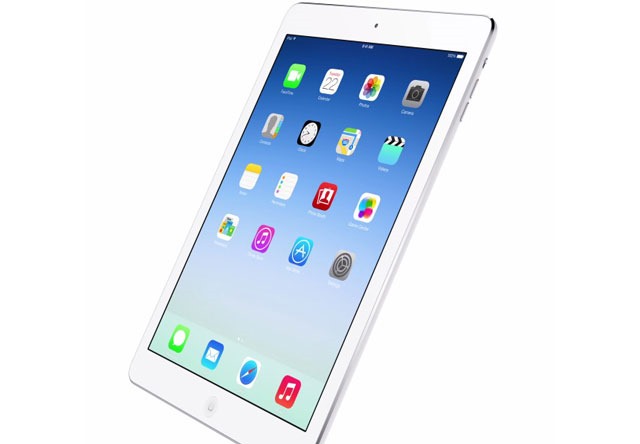
Apple has announced the 5th generation iPad last night, which doesn’t just bring a major change on its feature set, but also in its name. The latest iPad is called the ‘iPad Air’. The inspiration for this possibly came from the MacBook Air, another Apple product acclaimed universally for its design.
Statistically, the new iPad is 28 percent lighter than before, weighing 469g compared to 653g before, and is 20 percent thinner at 7.5mm. The bezels are also an incredible 43 percent lesser than before. These statistics make this tablet the lightest full-size tablet in the world.
The screen remains at the standard 9.7″ inch size and comes with a Retina Display of 1536 x 2048 pixels. The tablet comes with iOS 7.0.2 pre-installed.
On the hardware side, as expected, it comes with Apple’s 64-bit A7 processor (8 times faster than before, 72 times faster graphics) which debuted on the on the 5s, along with M7 motion co-processor. PowerVR G6430 Graphics are used, while the storage options are set at 16/32/64 or 128 GB.
The iPad Air comes with a 5 megapixel camera on the back, capable of shooting Full HD video at 30 fps, along with a 1.2 mp camera on the front and dual microphones.
Perhaps a disappointment for many could be the lack of Touch ID, which hasn’t made its way to any of the iPads.
Connectivity options with iPad Air include Bluetooth 4.0, Lightning Port, Wi-Fi (twice faster with MIMO 802.11) and optional LTE. A 32 Whr battery powers the tablet for up to 10 hours.
Finally, the price. The new iPad Air will start at $499 for the base 16 GB model when it will go for sale on November 1.
The 32, 64 and 128 GB models can be obtained for $599, $699 and $799 respectively. Color options will be either Silver/White or Space Grey/Black. The new Smart Covers, which feature the ability to get folded backwards, will come for $79. iPad 2 will be kept alive at $399.
The iPad Air’s not the cheapest tablet in the market, by far. What you do get is the brilliant ecosystem which is second to none and that, according to most, will be something which will give it an edge over others. That justifies the extra price too.