Monday, November 4, 2013

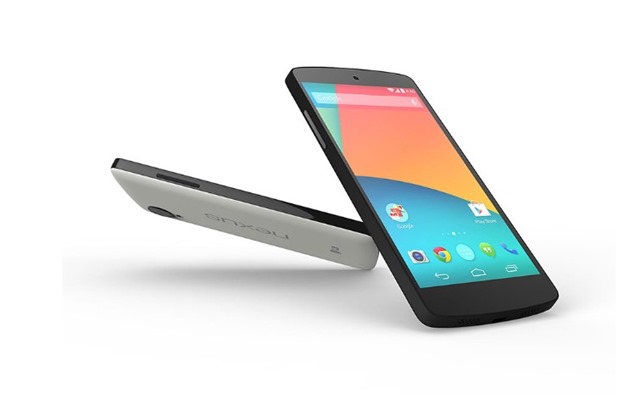
Google Nails it on the Head with Nexus 5

Nexus 5 Google Nails it on the Head with Nexus 5
This is it. The smartphone which is known for providing top-of-the-line experience at a lower price has finally gone official. After dozens of leaks and rumours (including once when its entire spec-sheet was revealed), Google has finally pulled the covers off the Nexus 5 – developed by LG — and it runs on Android 4.4 KitKat.
As is usual with these phones, the Nexus 5 packs quite a punch. It has a 4.95″  True HD IPS Plus panel on the front with Full HD resolution and 445 ppi pixel density. It is Gorilla Glass 3-protected.
The phone is made of plastic, but since it’s so cheap, we can live with that. The back does come with a soft-finish though. It weighs in at 130g, respectable for a phone of this size, and is 8.59mm thick. And quite unlike those metallic side-buttons on its competitors, the ones here are made of ceramic. Interesting.
On the inside, the phone houses a 2.3Ghz Qualcomm SnapDragon 800 processor with 2 GB worth RAM, Adreno 330 GPU and 16/32 GB flash storage. That last bit is a huge relief as as the meager 8 GB storage option is gone for good now.
Towards the back is the 8 megapixel camera with OIS, HDR+ and a 1/3.2″ sensor with f2.4 aperture. It is also capable of doing 1080p Full HD video recording and also comes with an LED Flash for use in low-lighting.
Considering that the last year’s Nexus came with an abysmal camera, we really hope things have changed this time. A 1.3mp camera is also found at the front.
The Nexus 5 is the first phone of the series with LTE, which is pointless for us (Pakistanis) but is a good thing to have (in case, times change in the future). It also has Wi-Fi 802.11ac, Bluetooth 4.0, NFC, A-GPS and microUSB.
For powering itself up, the phone comes with a 2300 mAh battery which does feel small for a 2013 smartphone but it seems as if Google has optimized the OS rather than increase the battery capacity here. Music playback, for example, is 60 hours long, thanks to a dedicated audio processor and software customizations. Wireless Charging is also supported.
Here are the specs of the Nexus 5:
  • Android 4.4 KitKat
  • 5″ LCD display with Full HD resolution (445 ppi)
  • Gorilla Glass 3 protection
  • 130 grams heavy
  • 8.59mm thick
  • 2.3Ghz quad-core SnapDragon 800 processor with Adreno 330 Graphics
  • 16/32 GB non-expandable storage
  • 8 megapixel camera with HDR+, Full HD video and LED Flash
  • 1.3 mp front-camera
  • 4G LTE, Wi-Fi 802.11ac, Bluetooth 4.0, NFC, A-GPS, microUSB
  • 2300 mAh battery
  • Available in Black or White
The accessories for the Nexus 5 includes bumpers which cost $35 a piece, while QuickCovers which cover the front & the back and are compatible with wireless charging cost $55 each. 
As for the Nexus 5 itself, it will start at $349 for the 16 GB version, or $399 for the 32 GB version. Colour options include either Black or White.
We know that’s quite a lot of money to ask for a phone which will be outdated after a year, yes, but the thing is that every bit of technology has and will. You may argue that point but there’s certainly one thing which no one will argue and that’s the simple fact that Google has nailed it. Again.

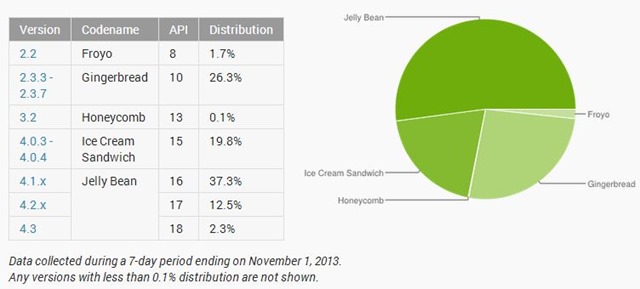
Jelly Bean Crosses 50% Android Market-share for the First Time

Remember the time when Gingerbread got out and Android phones suddenly started to sell like hot cakes? That was the time when Gigantic Apple and Nokia had finally got a serious competitor but the side-effect was that the large number of dumb phones during that time, which couldn’t get updated to newer Android versions and hence, the Gingerbread marketshare soared.
That has finally changed now. In October, for the first time ever, Jelly Bean crossed 50% marketshare of all Android devices out there. The 52.1% marketshare it holds is almost twice the share which Gingerbread is currently holding.
The good news is that it has finally started to drop at a substantial pace, quite unlike its stubborn nature.
Ice Cream Sandwich also dropped to just 19.8% now.

Start of another problem?
With KitKat, Google has finally decided that fragmentation needs to go away and that is why the latest version can run on phones with as low as 512 MB RAM but it won’t be going anywhere suddenly.
Mind you, that Jelly Bean is itself outdated now and if Google’s partners still carry on with their habits of not updating the operating system of their devices, it might turn out to be an even bigger issue than Gingerbread, given the massive spread of the phones running it.
Android version marketshare Jelly Bean Crosses 50% Android Market share for the First Time

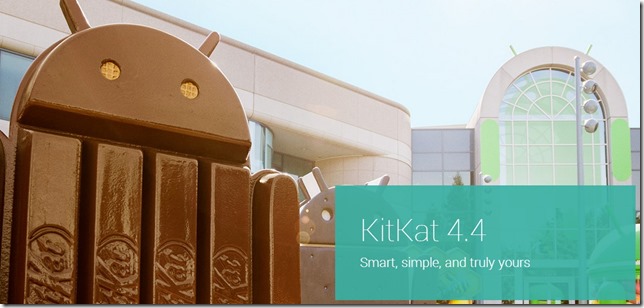
Google Brings Features and Visual Upgrades in Android 4.4 KitKat Update

KitKat Google Brings Features and Visual Upgrades in Android 4.4 KitKat Update
Every Android version announcement comes with new features, a few visual tweaks and lots and lots of hype. This time, though, things are a bit different as Google has made sure that everyone gets a taste of “KitKat”, rather than just the top 20%.
As a result, you have an OS which runs just as well on 512 MB RAM, as it does on 3 GB. This is not all however.

A Great Feat Visually

Android 4.4 KitKat tries to make the OS even more easier to swallow. It makes several visual improvements, including the departure of the black border at the bottom of the screen in favor of a translucent one. The launcher is also redesigned.
The three buttons also remain hidden in apps, until you swipe them upwards. And performance? The OS is also more intelligent in that it registers touches faster and more accurately which means less errors.
Chromium, the web engine behind Chrome now takes care of the web apps meaning that these apps should perform better than ever. Talking of Chrome, it now uses 16% less memory than before, just like other Google apps which are all optimized.

Software Changes

But it doesn’t only perform and look good. No. It also comes with a lot of software changes, most important of them being the new Hangouts app. The new substitute for the conventional messaging app combines all of the conversation you’ve ever had with your acquaintances in one place, either it be SMS, MMS or Hangouts video-calls/chatting.
The Call app is also tweaked. It automatically highlights those people with whom you’re in touch most. It will also search for businesses in the area around you now, meaning that if you’ll type the name of a restaurant in your area, the app will automatically search the map for its phone number.
The same thing happens when you get a call from an unknown number, as it will try to display a name if the number is from any of the publicly available business in Maps.
The lockscreen features an option to let you fly straight to the camera. It also displays a cover art or any other media highlight when your phone is playing something while being on the lockscreen. Also redesigned is the Downloads app which features even more sorting and viewing options now.
And it isn’t limited to the lockscreen only. If you do a lot of homescreen modifications, you can save and switch between all of them in settings now, without having to sacrifice one in the favor of other.

Search and Google Now

According to Google, it is 25% more accurate than before. You can go straightaway to search from the lockscreen now, just by saying ‘OK Google’ just like in the Moto X.
Now also asks you questions back if your search query isn’t clear to it. One good thing which is added is the ability to search inside the phone or tablet’s built-in app. For instance, if you have a food or recipe app installed on your phone and you want to search the recipe for, like say, Pasta, Now won’t only display web results but also results from your app will be displayed. That would be really helpful.
It also keeps care of your searching history and will redirect you to any of your favourite websites when you’ll call its name. It will also show even more cards of interest to you and can be used to do other tasks, such as playing music, using directions, etc.

Misc

Android 4.4 KitKat comes with a screen recording feature which lets you record a video of the stuff being displayed on your phone, as you use it.
A new feature called AirPrint will allow you to print stuff wirelessly now. This only works with printers with dedicated apps on the Play Store so only HP models will work as of today.
If your phone comes with a dedicated audio processor, here’s the good news: your phone will use it now. What that does is that it boosts playback time, like for example, the Nexus 5 comes with one and it features 60 hours worth music playback, that too on a 2300 mAh battery! Now that, is something.
The Gallery app now supports integration with cloud storage. Developers can now write apps for the IR Blaster while NFC payments are now supported for carriers worldwide. 

Availability

The update will begin rolling out in the coming few weeks. The new Nexus 5 will come with it pre-installed while the Nexus 4, Nexus 7 (2014), Nexus 10 and the Google Play editions of Galaxy S4 and HTC One are on the waiting list. We’ll be adding screenshots of it as soon as it comes out.
This update, with all its features and bells-and-whistles, marks the peak for Android. For us, however, it’s not the feature set which makes it so good, but rather its tight integration of everything which it does. That alone makes it worth an upgrade.

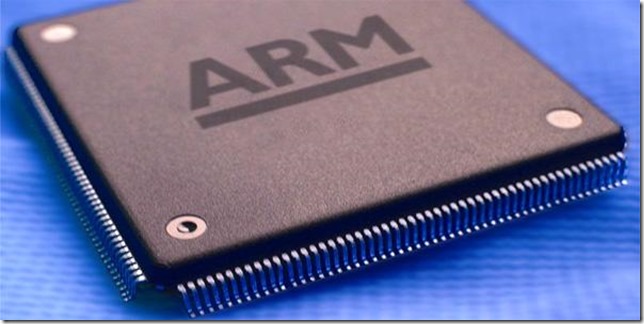
Intel Gives up its own Smartphone Processors, will make ARM Chips Now

arm processor Intel Gives up its own Smartphone Processors, will make ARM Chips Now
In the industry of smartphone processors, ARM sits atop them all in terms of market-share while others aren’t even close. ARM’s innovative and diverse processor designs have enabled the company to attain a huge market-share, around 95% of the smartphone industry, crushing everyone else.
Intel has been trying to resist this for quite a time but so far hasn’t been successful. While Intel’s Atom processor has been used in several phones over the years, it has done nothing to stop the growth of its biggest rival. But now, Intel has finally decided to give up and in the future will be making its own 64-bit smartphone chips based on ARM’s designs.
And so as the old proverb goes, “If you can’t best them, join them”, the company’s years of resistance in joining hands with ARM Architecture finally evaporates, leaving nothing but bad memories and multiple failed attempts.
Still, it will be interesting to see what benefits their architecture will offer. Given Intel’s own incredible history and experience, you can’t reject their products as dumb. And of course, the new processors with Intel’s manufacturing intelligence.
But there is little doubt that the customers will remain indifferent. One name which immediately comes to mind is Apple’s. While they’ve already had an extensive and popular partnership with Intel for their computers, their smartphone processors are still made by their nemesis, Samsung.
But whatever the case, the fight between Intel and its rivals in a territory owned by the latter will certainly be worth watching. Also it will bring greater good for all the companies buying these chips and in turn, for the customers.
For those who don’t know, ARM architectures — developed by British company ARM — require significantly fewer transistors, reduced costs, heat and power usage compared to more complex chip designs.

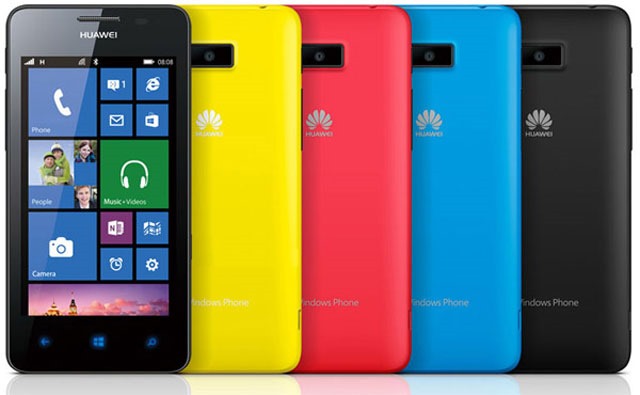
Huawei announces its second Windows Phone, the Ascend W2

Huawei Ascend W2 Huawei announces its second Windows Phone, the Ascend W2
Huawei is a rather unknown Windows Phone partner of Microsoft. It announced its first phone of the line-up way back in January and that was it. But now, they think its about time for a new phone to be announced and they’ve done exactly so with the Ascend W2.
The phone comes with a larger 4.3″ inch display with 800 x 480 resolution. It’s also Gorilla Glass-protected and comes with a Super Sensitive display. Design-wise, it is quite chubby, weighing in at 160 grams. Bezels are quite massive too.
Under the bonnet, it comes with a 1.4Ghz dual-core processor with 512 GB RAM, Adreno 305 and 8 GB non-expandable storage. Towards the back is a 5 mp camera with 720p HD video recording. There’s no secondary camera on the front.
Connectivity options include Bluetooth 3.0, microUSB 2.0, Wi-Fi and 3G. Battery capacity is set at 1700 mAh.
Pricing is not known right now but we will know that when it will be released in the coming few weeks. Color options include Blue, Red, Yellow and Black. If the Ascend W2 is placed in the range of the Lumia 620, it has the potential to become a bestseller.